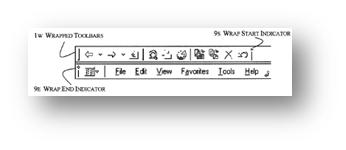
 The Patent Hawk Strikes: Gary Odom enjoyed inventing and patenting so much that he became a patent searcher. He also writes the Patent Hawk blog from his Oregon roost. He has now sued Microsoft in the Eastern District of Texas for infringing his Patent covering toolbar groupings (Patent No. 7,363,592). If you are using Office 2007, you might check to see whether your Microsoft click-through license includes indemnification.
 -
Law students ask me about law firm titles, so I created the following “Glossary of Patent Law Firm Professionals”
- Associate: A lawyer who is not yet a partner, but is on that track.
- Partner: Could be either equity partner or non-equity partner.
- Equity Partner: An owner of the firm. Firms may have complex ownership structures and various levels of equity.
- Non-Equity Partner: A senior associate with a fancy title. Many firms do not tell its clients which partners are equity vs non-equity.
- Of Counsel: Catch-all used when an attorney wants to work a reduced load or not be fully engaged with the firm. Also, many firms hire lateral would-be partners as of counsel until the firm decides to make a partnership offer.
- Special Counsel: Same as of counsel.
- Senior Counsel: Same as of counsel, but indicates a senior level attorney
- Technical Advisor: non-lawyer, often a patent agent. Some firms separate patent agents from technical advisors based on PTO registration.
- Law Clerk: non-lawyer, typically also a law student.
- Docketing clerk: Typically a paralegal. The most important job in a patent prosecution firm.
- Patent Paralegals and Secretaries: The most difficult positions to fill with qualified individuals willing to work with patent attorneys.
- Contract Attorney: The person who is treated the worst but is paid fairly well. Spends the day doing document review and checking facebook.
- Quote of the week: “Next time wear a tie. This is the Federal Circuit.” CAFC Judge to appellate counsel.
- Inventor Gil Hyatt gets $388 million more – this time from the California Franchise Tax Board. The lawsuit by Hyatt was filed in 1998 after California assessed Hyatt with millions of dollars of income tax while Hyatt claimed he did not live in the state. In the case, the Supreme Court had rejected California’s immunity argument – finding that a Nevada court was not required to give full faith and credit to California’s self-immunity statute. [Link] Gilbert Hyatt is known for receiving a broad patent on the microcontroller. Before the patent was invalidated, Hyatt received $70 million+ in royalties.
 The
The
“Zzzzzzzz”
Wake up Mr. Mooney, its time for your medicine.
“Sometimes finding a file is hard and it takes energy to use the search function.” I guess finding a file is almost as hard as getting a clue. Your computer determining that you want a file is called a cache – you mo0r0n.
“of counsel” often means a lateral attorney who does not have sufficient business to be brought on as a partner
At my firm, Of Counsel refers to a Senior Associate – not an attorney with a flexible work schedule or reduced work load.
This discussion is getting old. Dennis, isn’t there another recent FedCir case you can post on? Thanks
“You can conceive of a cat door in your closet, but have you conceived of something that has any desirable utility? No.”
Sure I can. Certain files are identified as “cat files” and they come out of the closet and appear on my desktop or in an “open file” menu based on the computer’s determination of the likelihood that I will be wanting them.
That’s desirable. Who wouldn’t want that? Sometimes finding a file is hard and it takes energy to use the search function.
pds, still avoiding the issue “With a computer, you first have to recognize the separate individuals. You then need to make certain assumptions regarding age and be able to apply those asumptions to the data you’ve obtained from the photo … not very easy at all.”
Again, yes, i’ll take your word for it that this is “not easy” but of course you realize that upthread you said “Enablement in the computer arts is typically a piece o’ cake, as the tools are very powerful and fairly well mastered.” So now you’ve identified something atypical, I guess. Fine.
But here’s the deal: if you figure out a method of doing this age determining thing with a computer, the invention and claims must be limited to **that method** (not the braod concept of doing it on a computer) and it sure as hell better not be a simple recitation of obvious garbage like “identifying an eye area, wherein if said eye area has wrinkles, determining an age score based on said wrinkles.”
Does “ordinary skill in the art” (osita) mean ordinary knowledge (education)?, or ordinary creativity?, or both?
I’ve always wanted to know.
correction: (To be honest, I doubt you’d have any success convincing a lower court to ignore the Supreme Court’s observation that one of ordinary skill has ordinary creativity.)
“You ever work in the outside world??”
Yes. And good luck, after presenting your dicta argument, moving to the next step: attempting to persuade a court that programmers are automatons, devoid of ordinary creativity. (To be honest, I doubt you’d have any success convincing a lower court to ignore the Supreme Court’s observation that one of ordinary skill lacks ordinary creativity.)
“Just assume the ordinary artisan is an automaton, eh? See KSR (“A person of ordinary skill is also a person of ordinary creativity, not an automaton.”).”
You ever work in the outside world?? The level of “ordinary creativity” is very low. Heck, if you worked at a law firm you should be able to recognize the same thing. Just look at the normal OAs issued from the patent office. It is rare to see an examiner actually try to use their brain instead of reproducing the same old tired arguments time and time again.
BTW: Do you know the difference between dicta and a holding?
“Would the method of disabling the feature be patentable?”
Not now … you can go into your word processor and disable a whole bunch of features and have been able to do so for many, many years. Even a casual user of computers should know that.
“A person working with small tools or objects has a loop or magnifier to help recognize the tools when the loop or magnifier is passed over the tools.”
Really??? In what art?
“Instead, the claims cover the broad concept of solving the problem itself.”
Not the claim I reproduced and has been the subject of my discussion. The broad concept of solving the problem is nowhere to be found in the claim.
As I noted above, the problems to be solved are not always the same. This is the point you are missing. You see a broad concept that may apply to both the physical device and computers and assume everything (including the solution) is the same.
Going back to my example of visually determining (guessing) ones age from a photo. It is something that most people can do with a fairly high degree of confidence. With a computer, you first have to recognize the separate individuals. You then need to make certain assumptions regarding age and be able to apply those asumptions to the data you’ve obtained from the photo … not very easy at all.
pds “The difference, which you don’t recognize, is that doing all these things on a computer are MUCH different than doing them elsewhere. Different problems need to be solved, different tools are employed, and different methodologies are employed with both. I can tell a five year old to pick out the oldest person in a family photo of a grandparent, parents, and child would be able to do so, but to ask a computer to do the same would be very complex and the ultimate solution, IMHO, would likely be patentable.”
Yes, pds. But my point is that these “complex solutions” are not what is being claimed. Instead, the claims cover the broad concept of solving the problem itself. A person working with small tools or objects has a loop or magnifier to help recognize the tools when the loop or magnifier is passed over the tools. Putting that functionality on a computer is not worthy of a patent, unless one would not expect it to work.
But you’ve already told us that programmers can make just about anything happen, and computers don’t get slowed down by additional functions, etc., so all your rebuttals to the prima facie case are gone. What you are left with is simply to cry and stamp your feet about “non-analogous art” and “hindsight.” Those arguments are pathetic.
“I can see every user disabling that feature after a couple of mis-clicks.”
Would the method of disabling the feature be patentable?
“These are enabling disclosures for a competent programmer. If these ideas were novel and non-obvious, how much more would a patent for them actually have to say? What does that say about granting twenty year monopolies for such things?”
Not a lot. And almost nothing.
Next?
“Although I said there may be many inventive computer programmers, you seem to forget that the standard is one of ORDINARY skill in the art. The ordinary programmer, like the ordinary engineer, ordinary attorney, ordinary patent examiner just wants to do their job and go home.”
Just assume the ordinary artisan is an automaton, eh? See KSR (“A person of ordinary skill is also a person of ordinary creativity, not an automaton.”).
Suppose that one button in the toolbar, maybe at one end or in the middle of the bar, was extra big and changed automatically to be the last tool that you used, to facilitate repetitive operations, or that tools were ordered AND varied in size according to their frequency of use.
Or suppose that MS Word had a big, easy to find button that let you turn all its default auto-formatting and correction functions off?
These are enabling disclosures for a competent programmer. If these ideas were novel and non-obvious, how much more would a patent for them actually have to say? What does that say about granting twenty year monopolies for such things?
“Putting aside the fact that you said there are many inventive computer programmers, do you really think that ‘great thinking’ is required in the ‘toolbar arts’?”
Although I said there may be many inventive computer programmers, you seem to forget that the standard is one of ORDINARY skill in the art. The ordinary programmer, like the ordinary engineer, ordinary attorney, ordinary patent examiner just wants to do their job and go home.
I think 6K showed why at least some above-average thinking is needed in the toobar arts. His invention wouldn’t be particularly desirable, and in fact, would be undesirable.
“toolbar that automatically brings the most used (or 2nd most used etc) icon straight to your cursor the moment the cursor enters the toolbar” Let’s see, the user leads the cursor to a partcular button on the toolbar, but once the cursor enters the tool bar and as the user is clicking, the toolbar rearranges itself. I can see every user disabling that feature after a couple of mis-clicks.
Well, I think someone new has appropriated e6k’s name. The level of animosity and the number of texting abbreviations have dropped way too much for these recent posts to be the original e6k.
Or else e6k has started law school. But I don’t think any law schools have started their fall semester yet.
Mooney = AllSeeingEye?
Brilliant!
“Its not really rocket science that I morphed from CaveMan (not sure where you got Gideon Pope from except perhaps that Pope is yet another poster that thinks you’re an eloquent m0r0n). However, unlike you, I ”
Zzzzzzzzzz….
That’s gobbledygook
“Eeeyeah right.”
MM=Scalia?
I don’t know SF, I actually wrote many applications for aspects of user interfaces including a couple for none other than Steve Jobs. Unless you are a power user like a developer or designer, you really don’t appreciate what user interface innovations can do that go beyond making an icon bigger when the cursor passes over it. I can guarantee you however, that in 1980 that was a big thing.
I suppose in Gunner Mooney’s damp basement, the idea of an invention related to transistor technology is also obvious, heck, EVERYTHING is obvious to Mooney, just like Michael R. Thomas invented everything of significance. Maybe they are one in the same too.
And, unlike you Mooney, I don’t see a world full of enemies. I see a world full of mostly smart, happy people with the occasional ego monster that annoys everyone by thinking they are getting away with something like posting under three or four names.
Hey guys, I just came up with the best toolbar invention evar.
Hawkie you can have this one, it’s on me.
What you do is you make a toolbar that automatically brings the most used (or 2nd most used etc) icon straight to your cursor the moment the cursor enters the toolbar and the toolbar automatically rearranges the rest of the icons to allow for this movement, the orientation of the icons remains until you move your cursor away from the toolbar. When the cursor goes out of the toolbox you can a. have all icons reset positions to default (or “home”) position or b. Have all icons remain in the rearranged way or c. do something else with them (that’s motivation for an examiner looking at the patent as a reference later so they can 103 all the rest of the people riding my coat ails).
IMMA GENIOS!!!!
Microsoft, when you implement this (I know, it takes time after you steal my “invention”) please pay me $$$$$$$. K thx.
Why do I get the feeling that my first client at a law firm will have “invented” this?
Its not really rocket science that I morphed from CaveMan (not sure where you got Gideon Pope from except perhaps that Pope is yet another poster that thinks you’re an eloquent m0r0n). However, unlike you, I only use one name at a time unless I’m providing a parody of you. You must really think that your name juggling and snide armchair obviousness determining is really going to have a profound impact on patent law? Eeeyeah right.
“Come up with a device capable of keeping track of the frequency of usage of all the various tools (e.g., scissors, crayons, glue, glitter, golden stars, pipe cleaners) on your desk. Much easier said than done.”
I don’t know about you, but I can order post it notes from my office manager and it’s pretty simple. Of course, saying “order some post its” is pretty simple too. Tough call.
“Epic fail.”
:'(
“Yet, to read the comments of others, persons of ordinary skill are incompetent when it comes to finding things obvious. Can one have it both ways (smart for enablement, incompetent for obviousness)?”
Yes. Have you known many engineers?
I had a career as an engineer prior to going to law school. I was never very creative. Tell me what you want designed, give me the specs, and I’ll do a good job designing it. But ask me to come up with ideas of what to design? Epic fail.
I’m the same way with invention disclosures. Give me a disclosure and I’ll envision every possible way the thing could be made and every possible feature it could have. But I couldn’t invent a darn thing. No creativity.
“You seem to take issue with the situations where any programmer could clearly implement a disclosed innovation.”
I do take issue with those situations where the claims recite only trivial “time-saving”, universally desired functionalities without any limits or only trivial limits on how those functionalities are obtained. Again, I liken it to the situation where one has a novel composition with a sincerely but insufficiently patentable utility (e.g., you can eat it and get some caloric value from it).
Let’s take the “innovation” of “when you pass a cursor over an icon on your screen it gets bigger.” I wouldn’t be surprised if the PTO has issued a claim with more or less that breadth. That’s wrong and the only thing that is more wrong is defending the claim by arguing that “if it was so obvious then why wasn’t it invented sooner.”
“turning food into music” see link to youtube.com
The “toolbar arts” is an under-served market. There is not enough patenting going on in that art.
“So, given the very low barrier to actually enabling the invention, how many people actually came up with the invention? Was it in the thousands? Perhaps hundreds? If it was so danm obvious, how come we aren’t talking about a decision on an interference proceeding?”
Novelty does not prove non-obviousness. Novelty in filing does not prove non-obviousness. And lack of an interference??? Is that really your argument???
“There are not a lot of great thinkers and doers out there.”
Putting aside the fact that you said there are many inventive computer programmers, do you really think that “great thinking” is required in the “toolbar arts”?
MM – Unfortunately I do not have time for a thorough response, but I do have some quick thoughts.
I appreciate your point regarding hindsight, however, I would argue that caselaw supports one while denouncing the other. More specifically, commercial success is objective evidence of non-obviousness. In the same vein, commercial appropriation of a feature, once publicized, represents not just commercial success, but further signifies the failure of the appropriator to previously conceive of that feature.
As for turning food into music, you are being a little silly, although I do understand that you are trying to make a point. The problem is, and I mean this with no disrespect, you have no background in programming, so it is hard for you to understand where the enablement bar lies. I agree that it can at times be a fuzzy bar, but those are not the situations you seem to have a problem with. You seem to take issue with the situations where any programmer could clearly implement a disclosed innovation. If one of ordinary skill is truly enabled, then what is the issue?
“In fact, the main barrier to putting additional functions on a computer is that they slow the computer down and clutter up the screen.”
Wow …. you are that ignorant about computers and their current capabilities??? Mind you, I’ll grant you that cluttering up a screen is a problem to be solved and happens to be the subject of a few applications I have seen, but putting additional functions in a GUI is going to do very, very, very, very little to slow it down.
“The ultimate goal is clear: virtual reality is a hyper-reality where you can be a superhero, whether it be formatting a document, painting a picture, touching up a photograph, sculpting, going on a virtual date, etc.”
The difference, which you don’t recognize, is that doing all these things on a computer are MUCH different than doing them elsewhere. Different problems need to be solved, different tools are employed, and different methodologies are employed with both. I can tell a five year old to pick out the oldest person in a family photo of a grandparent, parents, and child would be able to do so, but to ask a computer to do the same would be very complex and the ultimate solution, IMHO, would likely be patentable.
“they are nothing but ideas about things that would be nice” … and so is treating a specific form of cancer. However, I don’t see you railing upon those types of inventions. You, like SF, seem to be hung up upon the much easier implementation (of certain computer-related inventions) after conception than other inventions. You can conceive of a cat door in your closet, but have you conceived of something that has any desirable utility? No. If it was so danm simple to come up with these ideas, sit in front of your word processor and come up with a dozen ideas to improve it and file applications on them. Once they have issued, get a licensing deal from Microsoft and live off your royalties. So allegedly easy that anybody can do it …. yet so few people do it. Basic economics says that where there is a low barrier to entry and high margins that you’ll have more producers in the market. However, where is the evidence that all the obvious inventions are being simultaneously developed?
“The ‘disclosure’ of these ideas did absolutely NOTHING to hasten the arrival of the claimed technology to the public. If anything, the opposite has occurred. It’s bizarro patenting.”
Thanks for the conclusory statements that lack any factual support. Can’t you come up with a better argument than that?
“There’s a million ways to achieve the result and the programmers can figure this stuff out.”
Really, I don’t know of anybody capable of turning food into music or light with a computer. I’m not sure how even a really, really, good programmer could turn a sunset into a something audible so that a blind person could sense the sunset in any manner comparable to the way a sighted person would be able to. Of course, your arguments have little relevance to the facts of the particular patent we are talking about but instead, go to your obsession with Sandy Strawman. If you are a litigator, I really hope you have somebody else draft your arguments.
“it ain’t worthy of a patent unless and until it works better than you would expect it to.”
Hmmmm, let’s reserve 103(mm) for that standard of patentability. Isn’t it a little early in the week to be daydreaming?
“So which is ordinary?”
So, given the very low barrier to actually enabling the invention, how many people actually came up with the invention? Was it in the thousands? Perhaps hundreds? If it was so danm obvious, how come we aren’t talking about a decision on an interference proceeding?
“You first have to split hairs between implementation creativity versus inventive creativity.”
Split hairs???? Do you have any real life experience? You can find the “idea guy” (or gal) in all walks of life … this is the person that has ideas that nobody came up with before. Similarly, you can also find the “action man,” i.e., the person who actually gets things done. Although the really good ones combine a little of both, usually you find one or the other. This is no great observation on my part, as many people before me have made the same observation.
“Then you have to argue that one is ordinary while the other is not.”
You must not be working with a lot of life experience. There are not a lot of great thinkers and doers out there. Also, while there may be a lot of adequate doers, the number of even adequate thinkers are much less. The invention in this situation, IMHO, involved some above-ordinary level of thinking. However, just because the invention doesn’t even require an average level of competence to implement doesn’t mean the invention is obvious.
“Sure you can make your arguments with a straight face and under Rule 11, but that doesn’t mean that those arguments are persuasive.”
You seem to forget that the patentee/applicant does not have the initial burden of establishing that the claims are not obvious. Unless you can put forth a persuasive obviousness argument, patentee/applicant isn’t required to say anything.
“The “amount of enablement” required is different for the requirement under 112, 1st and for the requirement that the prior art enable the claimed invention for anticipation/obviousness.”
And to be perfectly clear: the level of enablement required in the prior art is lower than that required by 112, 1st. Judging by some of the patent references I’ve had cited against me by the PTO, the level of enablement required in the prior art is very close to zero.
JCD “The fact that it was easy to implement only reinforces the idea that it was inventive and innovative, because if it was obvious then it would already have been done.”
This hindsight argument is no better than the Examiner hindsight argument that everyone rails against.
In fact, the main barrier to putting additional functions on a computer is that they slow the computer down and clutter up the screen. As computers become faster and bigger, high resolution screens become cheaper, then it becomes “easier to implement” all this non-inventive hoohaw. It has nothing do with whether it was “obvious” or not. The ultimate goal is clear: virtual reality is a hyper-reality where you can be a superhero, whether it be formatting a document, painting a picture, touching up a photograph, sculpting, going on a virtual date, etc.
Once that basic fact is recognized, the *concept* of, say, having a virtual palette for virtual painting where the virtual palette “remembers” your favorite colors and brush strokes is obvious and should be unpatentable *unless* you have a specific method for achieving that result that one skilled in the art would not have predicted would be successful *and* those steps are recited in the claims.
pds “Enablement in the computer arts is typically a piece o’ cake, as the tools are very powerful and fairly well mastered.”
Well, then, that’s why it’s a joke that the claims we’ve been discussing are actually issued because they are nothing but ideas about things that would be nice. The only genuine “insight” of the inventors was that if they write those ideas down and send them to the PTO they can file it, possible get a patent, and shake down Microsoft or some other deep pocket company. The “disclosure” of these ideas did absolutely NOTHING to hasten the arrival of the claimed technology to the public. If anything, the opposite has occurred. It’s bizarro patenting.
Let’s take the “piece of cake” enablement paradigm at face value. I could imagine all kinds of methods for converting one sort of sensory information to another, e.g., converting text to spoken words so blind people could “read.” Now that stuff is old. But that is the tip of the iceberg. If I don’t have enablement to worry about, then why not file upteen applications on all the myriad concepts I could come up with just sitting at my desk? Turning sunsets into audible or tactile sensations so blind people could “see” them. Or turning food into music or light so people who have lost their sense of taste can “taste” them. All “computer-implemented” of course, and braodly claimed. My specification will be devoid of algorithms, of course. What’s the point? There’s a million ways to achieve the result and the programmers can figure this stuff out.
The point is that sitting around and dreaming this garbage up may be “inventing” but it ain’t worthy of a patent unless and until it works better than you would expect it to.
PDS: “to keep track of the relative frequency of use of the tool in the toolbar … not something easily done outside of the computer realm. Moreover, one needs to automatically rearrange the tools”
MOre or less what you hear in any SMED (Single Minute Exchange of Die)workshop. Known since at least the 70´s. You just need an automatized magazin for the tooling behind the scene, and you got the same method in the real world as in your GUI. If you give me 500 bucks, I can find it for you; I give you 1000$ if I can´t find it. Agreed?
Do you think the public is allowed the last step of implementing it on the computer and arriving to the subject-matter now? Or is it too inventive for him?
The motivatin being to gain time in both cases.
Currently, almost no one is happy with the state of software patenting. Even aside from issues with prior art searching and the poor quality of OAs in general, and 103 rejections specifically (which is a widespread problem in the electrical and mechanical arts), application of 101 is, unfortunately, erratic and unpredictable, both in examination and even more so later in litigation. It is not a matter of understanding the case law; the case law is simply not consistent. It does not help that the BPAI chooses which case law to apply on a seemingly arbitrary basis. One day claims referencing a “computer readable medium” are sufficient to establish patentability, on another day they are woefully insufficient.
But, as muddied as the waters of software patenting are, there is no viable alternative. For those disparaging software patents, what exactly would you propose? If an inventor, startup, or small business conceives of innovative software, or an innovative feature, what course of action should they take? Consider that work that they have done over years can likely be duplicated by a large team in months if they do not obtain some protection.
—-
SF – I understand how it can seem that software patentees are trying to have their cake and eat it too. However, the reality is that there is often an innovative concept, the implementation of which can easily be accomplished in any number of ways. Adoption of one of these innovative features in major pieces of commercial software would certainly seem to signify commercial success. The fact that it was easy to implement only reinforces the idea that it was inventive and innovative, because if it was obvious then it would already have been done.
“Computer programmers, while many are inventive, many are not.”
So which is ordinary? You first have to split hairs between implementation creativity versus inventive creativity. Then you have to argue that one is ordinary while the other is not. Then you have to argue for an incredibly low amount of of inventive creativity in the “toolbar icon” arts for this case.
Sure you can make your arguments with a straight face and under Rule 11, but that doesn’t mean that those arguments are persuasive.
The “amount of enablement” required is different for the requirement under 112, 1st and for the requirement that the prior art enable the claimed invention for anticipation/obviousness.
Ah, those mere mortals, the non-patent people… bless them.
“Yet, to read the comments of others, persons of ordinary skill are incompetent when it comes to finding things obvious. Can one have it both ways (smart for enablement, incompetent for obviousness)?”
I’ve known some extremely talented machinists in my day who could create just about anything you could put on an engineering drawing. However, although they were great machinists, they weren’t “big picture” people that had a firm grasp of why they were making the things they were making. That being said, they could certainly enable an invention (i.e., they knew how to make the invention), but they wouldn’t be worth a lick in establishing that the things they made were obvious.
Computer programmers, while many are inventive, many are not. Tell those that are not what to do and the end result, and they are good at coding the desired functionality/utility. However, it doesn’t mean that can come up with inventive ideas.
Your rhetorical question as to “smart for enablement, incompetent for obviousness” is based upon the incorrect premise that the same “smarts” are used for both. Being functionally smart (i.e., enablement) and creatively smart (i.e., capable of rendering obvious inventions) are very often two things entirely. This is a very basic concept that even non-patent people can understand.
“Can one have it both ways, smart for enablement, incompetent for obviousness?”
Yes.
“There are an infinite number of ways to code any concept. One of skill in the art does NOT need code in a spec for it to enable him to practice the invention.”
Yet, to read the comments of others, persons of ordinary skill are incompetent when it comes to finding things obvious. Can one have it both ways (smart for enablement, incompetent for obviousness)?
“Enablement is a piece of cake. I don’t even need to include any code in my spec. Let those of skill in the art figure out the pathetic details. If I let them take a license, of course.”
Enablement in the computer arts is typically a piece o’ cake, as the tools are very powerful and fairly well mastered. If I invent a new type of engine block, I don’t need to describe the techniques used (i.e., cast the block and then machine it) to make it. Again, if you stuck you head outside your biotech world, you would realize that things work very different in the ROTW.
“What about a method where the entire ‘invention’ lies in the ‘counting’ limitation but the claim recites the ‘counting’ aspect merely as a desired function/property without any steps describing exactly **how** the counting actually occurs? Is that patentable?”
The invention hardly lies in the counting (which isn’t even explicitly recited in the claim I was discussing). Are you that daft? Seriously. Do you even understand the invention? I doubt it.
Paranoid, meet schizophrenic. I’m sure you two will get along.
Actually, I’m beginning to suspect there’s just two of us here: me in my various personae and whoever it is that’s pretending to be all of the rest of you.
Or maybe it’s just me and I’m suffering blackouts.
Proverbs for paranoids: You may not touch the Master, but you can tickle his creatures.
“However, a computer oriented application using means-plus-function claims must “at least disclose the algorithm that transforms the general purpose microprocessor to a “special purpose computer programmed to perform the disclosed algorithm.””
Note that this requirement applies only to means plus function claims. If you are going to recite “a means for performing function X”, you need to provide a level of detail in the spec at least one level below simply describing the function to be performed. That extra level of detail will not require providing source code.
For claims that don’t invoke 112 6th paragraph, the extra detail is not needed as long as a person skilled in the art can implement the function from the description.
One of skill in the art does NOT need code in a spec for it to enable him to practice the invention.
Posted by: Lowly | Aug 21, 2008 at 08:55 AM
But it might be desirable to avoid the indefiniteness rejection. See the Patently-O discussion of Aristocrat v. IGT on Mar. 31, 2008. The relevant part is:
However, a computer oriented application using means-plus-function claims must “at least disclose the algorithm that transforms the general purpose microprocessor to a “special purpose computer programmed to perform the disclosed algorithm.”
Interestingly, a Google search came up with some Congressional testimony from a patent attorney who basically argued that patent applications putting source code in the specification might meet best mode and enablement, but could (should?) be rejected as violating the written description requirement because source code is not clear or concise.
When it comes to non-analogous prior art, an examiner needs to do a little heavy lifting to come up with that “rational underpinning” to support the examiner’s rejection.
I guess my opinion boils down to saying that what you refer to as heavy lifting really isn’t all that heavy.
Mooney,
Have you ever written a line of code in your life? There are an infinite number of ways to code any concept. One of skill in the art does NOT need code in a spec for it to enable him to practice the invention.
“I suppose Mooney would pooh pooh Michaelangelo because he used standard tools such as paintbrushes, and in Mooney’s glib and barren world, any fool with a paintbrush could cob together the Creation of Adam and touch the hand of God.”
I’m agnostic on the bigger dispute on this thread because frankly, I don’t understand the issues well enough yet to have confidence in my conclusions. However, I’m pretty sure this assertion is a little fast-and-loose, because Michaelangelo’s work wouldn’t have been patentable, rather it would have been copyrightable. That’s a pretty significant difference.
Another aside: the idea of ranking and rearranging on the basis of relative frequency would have been obvious to any graduate student in electrical or computer engineering in the 1990’s. (Just think, for example, of David Huffman’s seminal 1952 paper as one of the prior art references.) Although I admit that generally claims are a bizarre foreign language to me, it really does appear that the claims at issue here attempt to cover the idea of relative frequency ranking generally without actually disclosing any specific method.
Or Jerry Springer.
I wonder if Dr. Phil would like to have a show comprised of Patently-O blawgers?
mooney/duckworth, I agree with you completely!
At least with regards to AllSeeingEye/Caveman/GideonPope…
“mooney/duckworth/bloom”
An early sign of paranoid psychosis is the lumping one’s perceived enemies into a common, globular “they.” “They” are out to get me. “They” are all wrong. Are you one of “them?”
It rarely occurs to the victim that individuals could think alike. Whereas similarities in response to the victim’s communications are perceived by him as conspiracy or a many-headed-hydra, the non-retarded individual naturally associates such similar responses to the content of his own communications rather than to each other.
If you know someone like this, have them seek treatment immediately. It is reversible if caught early!
Plain-language translation for AllSeeingEye: honk, honk!
To anyone who has designed user interfaces or used poorly designed ones and understands some of the unique issues associated with them, many user interface “devices” and operations are non-trivial.
While on one hand one might be tempted to say that if you can cob it together with a standard GUI development tool out of the box, without any kind of mods, then you probably aren’t really inventing anything. On the other hand, the transistor was invented with a few scraps of silicon, some wires, some solder and some other standard stuff, after some pretty serious calculations of course. And of course an y artist usually uses fairly standard tools such as paintbrushes to create works of art.
I suppose Mooney would pooh pooh Michaelangelo because he used standard tools such as paintbrushes, and in Mooney’s glib and barren world, any fool with a paintbrush could cob together the Creation of Adam and touch the hand of God.
Eeeyeah right.
Yes, you are indeed smart.
You are so smart AllSeeingEye…
Gunner Mooney, please take a break. I recommend participating in ladies synchronized swimming with one of your many alter egos such as Leopold Bloom or millard duckworth. I took a poll, its pretty much unanimous: we’re all on to your BS.
“Come up with a device capable of keeping track of the frequency of usage of all the various tools (e.g., scissors, crayons, glue, glitter, golden stars, pipe cleaners) on your desk. Much easier said than done.”
LOL. First of all, it is exceedingly easy so you still have your head stuck in the sand. Second, why do I need to actually invent a specific “device” anyway? Evidently, I only need to claim the concept and add the magic words: “computer-implemented”. Enablement is a piece of cake. I don’t even need to include any code in my spec. Let those of skill in the art figure out the pathetic details. If I let them take a license, of course.
“Just because counting is known doesn’t mean that a method involving counting cannot be patentable.”
What about a method where the entire “invention” lies in the “counting” limitation but the claim recites the “counting” aspect merely as a desired function/property without any steps describing exactly **how** the counting actually occurs? Is that patentable?
“This is exactly the sort of bizarre reality-denying ‘argument’ that I was referring to. Is it really difficult to keep track of the relative use of objects ‘outside of the computer realm’? No. It’s not.”
Come up with a device capable of keeping track of the frequency of usage of all the various tools (e.g., scissors, crayons, glue, glitter, golden stars, pipe cleaners) on your desk. Much easier said than done.
“And of course it’s a total red herring anyway because even in the ‘computer realm’ the act of ‘counting things’ is ancient and unless you’re doing a kind of counting that nobody could feasibly implement as of the filing date (say, counting certain brainwaves in real time several feet from the brain through the air) then your ‘argument’ gets you nowhere.”
Do you really understand inventions outside the biotech realm????? The question is not whether can it be done since most mechanical/electrical/computer inventions are implemented using (sometimes notoriously) known techniques/methodologies/elements. Just because counting is known doesn’t mean that a method involving counting cannot be patentable. If you do litigate, I hope your invalidity arguments are stronger than that … come on, a 1L from a tier-4 school could do better than the “doodoo” arguments you come up with.
“Oh, so all this issuing of broad computer-implemented concept claims stopped right after the issuance of the claims we’ve been discussing? My bad.”
You think the claim was broad???? It is a minor, narrowly-focused feature which, although useful, is hardly necessary and easily designed around. Moreover, the absence of such a feature would probably not even be noticed by an end user. You do get lathered up over nothing, don’t you?
“When the claim recites nothing more than a feel-good concept ‘implemented’ on a computer, it’s a baloney claim.”
I see you mastered the terminology of 101 jurisprudence. If you are going to pretend to be an attorney, try to use the terminology that the rest of us use when talking about the same topic. You sound like 6K. Actually, 6K had a better grasp of the terminology than you.
“In other arts units, certain utilities are deemed so trivial that the composition, even if is new and non-obvious, do not get past the door.”
Care to back that up with any examples + case law?
“The number of such people is shrinking all the time in part because of the garbage that is routinely exposed. That shrinking number is partly responsible for the deserved death of so-called signal claims. Judicial reality, thankfully, is not virtual.”
Tilting at windmills again … why don’t you try out for the U.S. men’s Olympic basketball team in 4 years, you’ll find that your time is more productively spent in that endeavor.
“one needs to keep track of the relative frequency of use of the tool in the toolbar … not something easily done outside of the computer realm.”
This is exactly the sort of bizarre reality-denying “argument” that I was referring to. Is it really difficult to keep track of the relative use of objects “outside of the computer realm”? No. It’s not. And of course it’s a total red herring anyway because even in the “computer realm” the act of “counting things” is ancient and unless you’re doing a kind of counting that nobody could feasibly implement as of the filing date (say, counting certain brainwaves in real time several feet from the brain through the air) then your “argument” gets you nowhere.
“Anybody practicing before the 2100 and 3600 groups can verify that the only rubber stamps employed in these groups are the rejection stamps and the final rejection stamps.”
Oh, so all this issuing of broad computer-implemented concept claims stopped right after the issuance of the claims we’ve been discussing? My bad.
Believe it or not, reality is analogous to virtual reality. I respectfully submit to you that the concept of virtual reality was given its name for this very reason. When the claim recites nothing more than a feel-good concept “implemented” on a computer, it’s a baloney claim.
What happens when we have smell-o-vision and touch-o-vision? Are people going to be granted claims to broad “computer-implemented” methods of smelling and touching that provide only the utterly predicable and dubious “benefits” a first grader would expect?
In other arts units, certain utilities are deemed so trivial that the composition, even if is new and non-obvious, do not get past the door. That is not to say that the compositions don’t work for the claimed utility or that the claimed utility is not desirable. The point is that granting patents on compositions with that trivial utilities has been deemed *undesirable*.
A patent on a computer “toolbar” — and it doesn’t really matter what bells and whistles are on the silly thing — is another such patent. There are millions of others. The patents exist because some people want them exist. The number of such people is shrinking all the time in part because of the garbage that is routinely exposed. That shrinking number is partly responsible for the deserved death of so-called signal claims. Judicial reality, thankfully, is not virtual.
Actually pds, you can make a 103 argument without ever talking about the validity of the combination – you can simply argue that the combination, valid or not, fails to teach all the elements.
to gunner mooney/duckworth/bloom you’re clearly high on the smell of Crystal City Restaurant BBQ sauce again, its coming from those file jackets you keep sniffing for making your astute “obviousness” determinations.
Thanks for the help, handy helper.
“This raises an interesting legal question [on which I express no opinion here] as to whether or not such helpful spec body admissions [which may or may not be read or applied by examiners] are satisfactory equivalents for all purposes of formally citing specific identified prior art reference examples thereof on the current version of PTO Form 1449?”
If I have a new type of bicycle gear and I state in the background of the invention section of the application that bicycles have a driven wheel connected by sprocket gears to pedals driven by a user, do I need to cite something in PTO Form 1449 … my guess is NO.
“As a desirable substitution of actual case law language to debate in lieu of the personal hyperbole above, see for example the first sentance of the following language from In re Comiskey (Fed. Cir. 9/20/07):
“The routine addition of modern electronics to an otherwise unpatentable invention typically creates a prima facie case of obviousness.”
Why would the invention be otherwise unpatentable?
“As I read understand the argument, labeling one or more references as non-analogous art is just one way of establishing a lack of motivation to combine.”
Actually, all 103 arguments are just variations of saying “for X reason, combining A with B would not have been obvious to one having ordinary skill in the art at the time of the invention.” You use the term “motivation,” but it can be anything (e.g., teaching, suggesting, common sense rationale, etc.). Remember, “rejections on obviousness cannot be sustained by mere conclusory statements; instead, there must be some articulated reasoning with some rational underpinning to support the legal conclusion of obviousness.” When it comes to non-analogous prior art, an examiner needs to do a little heavy lifting to come up with that “rational underpinning” to support the examiner’s rejection.
“Let me clarify something before a great deal of time is wasted: I am speaking in the context of claims of the sort we’ve been discussing, i.e., broad claims that refer to computers for the sole purpose of shunting the subject matter into an art unit packed to the gills with rubber stamping “engineers” and other incompetents.”
Packed to the gills with rubber stamping engineers and other incompetents?????????? MM, you’ve made many ignorant statements but this one nears the top. Anybody practicing before the 2100 and 3600 groups can verify that the only rubber stamps employed in these groups are the rejection stamps and the final rejection stamps.
As for your “broad claims that refer to computers for the sole purpose of shunting the subject matter into an art unit …,” are you really as stup_id as this statement implies??????
Besides the fact that any non-computer implemented system doesn’t arrange tools in toolbars, to actually implement the claimed invention one needs to keep track of the relative frequency of use of the tool in the toolbar … not something easily done outside of the computer realm. Moreover, one needs to automatically rearrange the tools … again, not something easily done outside of the computer realm. Thus, contrary to MM’s asinine statement about the “sole purpose” of the claims, the claims are directed to a computer-implemented system because it is the computer itself that makes such an invention possible and practicable. Moreover, I have no doubt that if someone created a mechanical device to sort woodworking tools in a toolbox based upon relative frequency of use, such an invention would stand a far better chance of getting allowed.
“I mean, just how many of these patents need to be exhibited and discussed before the true-believers and self-interested gamers quit trying to defend them?”
If the inventor is suing Microsoft, apparently Microsoft believes the invention has some utility. Otherwise, they wouldn’t have included the feature. Useful + man-made = statutory subject matter in my book, and it also comports with the case law laid down by the courts. Again, MM can continue tilt at windmills for all the good it is going to do him.
Andrew Dhuey,
See
link to patentlyo.com
Will someone please tell me which case the “tie” came from? I must listen to that.
Re the current viability of “non-analogous art” arguments to resist 103 combinations, note that Agrizap v. Woodstream Corp (Fed. Cir. 2008) [on rat traps] (citing KSR) and the Sup. Ct. KSR case itself [dual function brakes with wiring connected at a brake pivot axis which the brake art per se apparently did not teach?] required combining electrical switch art from non-analogous arts with other art that was from the field of the invention.
“Has your experience with the PTO been different? Are those non-analgous art arguments still working?”
They don’t work so well. The best argument is always that a claimed element is now in any of the references. If I can’t argue that, I try to find a clear teaching away in the references. The teaching away argument that is my favorite is that if you were to selectively replace element A of reference X with element B of reference Y, the utility of X would be destroyed and you would have an inoperable device. That argument does work, although sometimes clever examiners find ways around it.
“Also, KSR wasn’t even a case about analagous (or not) prior art.”
pds,
As I read understand the argument, labeling one or more references as non-analogous art is just one way of establishing a lack of motivation to combine. Certainly that’s the way the argument is presented in the MPEP.
Since KSR allows establishing non-obviousness without TSM, I believe KSR renders non-analogous art arguments (and any other argument that directly refutes motivation to combine) far less powerful.
In those cases where the applicant is not arguing that some claimed element is completely missing, the examiner can simply identify some advantage in the final combination to cite as a reason to use feature A from an allegedly non-analogous reference with XYZ. In most cases it’s not too difficult to find a reason when you are not tasked too heavily with showing that the identified reason is not hindsight.
I suspect that establishing that a reference is non analogous might be helpful in arguing that there is no reasonable expectation of success in the unpredictable arts, but that such arguments won’t be effective in the mechanical or electrical arts. But I don’t know first hand if that’s true.
Has your experience with the PTO been different? Are those non-analgous art arguments still working? Is the BPAI still buying them on appeal? I’d appreciate hearing what others think about this.
As a desirable substitution of actual case law language to debate in lieu of the personal hyperbole above, see for example the first sentance of the following language from In re Comiskey (Fed. Cir. 9/20/07):
“The routine addition of modern electronics to an otherwise unpatentable invention typically creates a prima facie case of obviousness. Moreover, there is no pertinent evidence of secondary considerations because the only evidence offered is of long-felt need for the unpatentable mental process itself, not long-felt need for the combination of the mental process and a modern communication device or computer.”
“Except that toolboxes with arrangeable tools are perfectly analogous to toolbars on computers.”
Let me clarify something before a great deal of time is wasted: I am speaking in the context of claims of the sort we’ve been discussing, i.e., broad claims that refer to computers for the sole purpose of shunting the subject matter into an art unit packed to the gills with rubber stamping “engineers” and other incompetents.
“Also, you go 103 and I start arguing non-analogous prior art”
“Non-analogous is still non-analogous.”
Except that toolboxes with arrangeable tools are perfectly analogous to toolbars on computers. pds knows this. Everybody knows this.
But rying to get some folks to simply admit that many (most?) computer-implemented claim are non-inventive garbage is like trying to convince a creationist that their “theory” is just a fairy tale. It can’t be done because the cost of engaging in a sincere discussion is too great. So instead, we get the old trick of sticking one’s head in the sand, moving the goalpost, and never — *ever* — being convinced that one’s nose is in fact a part of one’s face.
What fascinates me most about the discussion is: when is enough? I mean, just how many of these patents need to be exhibited and discussed before the true-believers and self-interested gamers quit trying to defend them?
As noted above, strangely only one single prior art reference is noted on this patent, but the patent spec does “acknowledges that the prior art included multiple toolbars, toolbars including handles by which a toolbar may be moved, and toolbars divided into groups by group dividers.”
This raises an interesting legal question [on which I express no opinion here] as to whether or not such helpful spec body admissions [which may or may not be read or applied by examiners] are satisfactory equivalents for all purposes of formally citing specific identified prior art reference examples thereof on the current version of PTO Form 1449?
“Do non-analogous art arguments still work? I would expect that in a predictable art that such arguments Examiners would respond to them with some KSR boilerplate about how improvements in one field can be applied in a different field.”
Non-analogous is still non-analogous. The case law (prior-KSR) allowed exceptions. As such, as far as I know, nothing said in KSR represented a departure from prior case law. Also, KSR wasn’t even a case about analagous (or not) prior art.
“Also, you go 103 and I start arguing non-analogous prior art”
Do non-analogous art arguments still work? I would expect that in a predictable art that such arguments Examiners would respond to them with some KSR boilerplate about how improvements in one field can be applied in a different field.
BTW: A better piece of prior art would have been U.S. Patent No. 6,828,992, which I found in the time between when I last posted and to when I posted this.