 Nystrom v. Trex and Home Depot (Fed. Cir. 2009)
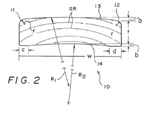
Ron Nystrom’s patent covers a type of decking board that is shaped in a way to shed water. In a prior case, the Federal Circuit, limited the claim term “board” to cover only boards made of “wood cut from a log.” Nystrom’s case was one of the first examples of how Phillips v. AWH could be used to limit claim scope based on statements in the specification and prosecution history – even when those statements do not rise to either a disavowal of scope or definition of a term. Because the Trex’s product is a wood-composite, it did not literally infringe the asserted claims. The district court also held that Nystrom had waived its right to argue infringement under the doctrine of equivalents.
A few days after losing the first case, Nystrom filed a second lawsuit against Trex and its distributors (Home Depot, et al.). Asserting infringement under the doctrine of equivalents against a second generation of Trex products.
On appeal, the Federal Circuit has held that the second lawsuit is barred by the claim preclusion doctrine of res judicata. Following a final judgment on the merits, claim preclusion binds parties from re-litigating the merits presented and also from raising “any other admissible matter which might have been offered” on the merits. In patent law, claim preclusion only arises when the accused product in the second suit is “essentially the same” as the accused product in the first suit.
For claim preclusion in a patent case, an accused infringer must show that the accused product or process in the second suit is “essentially the same” as the accused product or process in the first suit. Foster, 947 F.2d at 480. “Colorable changes in an infringing device or changes unrelated to the limitations in the claim of the patent would not present a new cause of action.” Id. Where an accused infringer has prevailed in an infringement suit, “the accused devices have the status of noninfringements, and the defendant acquires the status of a noninfringer to that extent.” Young Eng’rs, Inc. v. U.S. Int’l. Trade Comm’n, 721 F.2d 1305, 1316 (Fed. Cir. 1983).
Notably, claim preclusion applies applies even against issues that are waived – as here – rather than contested in open court.
In the present case, Trex admits that its new products are different, but argues that they avoid infringement in the same way – namely that its boards are not “cut from a log.” The Federal Circuit recognized this as a novel question of whether the “essentially the same” requirement should focus only on the claim terms at issue in the original case:
This court has previously emphasized that the focus for claim preclusion should be on “material differences” between the two accused devices, but has not addressed directly whether the focus of the “material differences” test is on the claim limitations at issue in each particular case.
Agreeing with the accused infringer Trex, the Federal Circuit ruled that claim preclusion applies – since the second suit would involve Nystrom “attempting to prove infringement of the same claim limitations as to the same features of the accused devices.”
Vitiation: Judge Rader authored the majority opinion, which was joined by Chief Judge Michel and Judge Prost. In addition, Judge Rader filed three pages of “additional views” focusing on the doctrine of equivalents (DOE) and its sub-doctrine of claim vitiation. DOE allows a patentee to prove infringement even when an accused device is missing certain claim limitations – so long as the difference from the claimed limitation is only insubstantial. One limitation of the DOE is that does not apply where its application would “vitiate a claim limitation.”
Judge Rader argues that the two potentially inconsistent doctrines can be reconciled into a single doctrine that both focus on the “substantiality of a missing claim limitation.” In other words, Judge Rader argues that vitiation is not a separate sub-doctrine, but rather is wholly “subsumed within the test for equivalents itself.”
[C]laim vitiation, by definition, simply rewinds and replays the doctrine of equivalents test for substantiality of a missing claim limitation. Thus, a finding of insubstantial difference to show equivalency obviates any further vitiation analysis—the wholly insignificant equivalent, by definition, would not vitiate the claim. On the other hand, a finding of substantial difference renders vitiation unnecessary. Thus, the vitiation doctrine is really subsumed within the test for equivalents itself. In other words, the all elements rule is simply a circular application of the doctrine of equivalents.
The problem with this approach is the hodge-podge of law vs. fact differentiation created by the Federal Circuit. Notably, DOE is a question of fact (decided by juries) while vitiation is a question of law (decided by judges).
This case can serve to illustrate this situation. Trex argued to the district court that a finding of equivalents on a product comprised of forty to fifty percent wood would necessarily vitiate the claim language requiring the board to be “made [entirely] from wood.” The district court agreed and barred Nystrom from pursuing an infringement theory based on equivalents. Would the result be different, however, if the accused device was comprised of fifty-five or sixty percent wood? Seventy percent? Should this question be resolved by a jury, by a judge, or by both?
I think that the patent system needs to be FIXED!! Inventors should have the right to be rewarded from thier inventions. The courts should
side on helping the inventors not big business.
Ron Nystrom
John,
I agree with you.
I, admittedly, read neither the application nor the original CAFC decision, but my feeling is that importing the “wood” limitation and then denying DOE was unfair to Nystrom, but worse, rendered the interpretation of this, and maybe any patent, unpredictable.
I won’t go into what I think is unfair, but I demonstrated the lack of predictability in the 5:27 posting. The metes and bounds of the issued claim were clear, but now?
Erez,
Again, I’m a PHOSITA, not a lawyer, but what I saw early on in this discussion was way too much concern about the wood in the composite, the % of wood in the composite, etc. My point was that the Trex material is PLASTIC. Plastic that has wood inside it, but still first and foremost plastic. Without the plastic, you would have a pile of sawdust. Without the sawdust, you still have a board. The board is PLASTIC.
If the DOE say the Trex material infringes, then it should do so regardless of the amount of wood inside the composite, even if it is wood-free. Focus on the bigger idea of a “board” made of whatever, not that there is WOOD in it.
Too many people here are seeing “wood” in the patent, and “wood” in the Trex product and therefore think there is a connection. There isn’t. Nystrom waived the DOE argument, so there is no way to decide this other than as it was.
I think if you read the opiniion the basic board needs to be “cut from a log”. I don’t imagine that would preclude the use of additional coatings or facings from infringing.
John Spevacek, at 12:32 you said that you figure that a wood/plastic composite board is not infringing because it is not wood.
Could you have predicted that a flooring board curved in the same way and for the same purpose as Nystrom’s flooring board would not infringe the issued claims before the “wood” limitation was imported?
And once the limitation is imported, what is the line between “wood board” and “composite board”?
Does a plywood board infringe?
Does a 1 cm thick wood board having a 1 mm composite support underlayer infringe?
Does a 1 cm thick wood board having a 1 mm melamine face infringe?
Does a 1 cm thick composite board having a 1 mm parquet-laminate infringe?
And if we stay with composite flooring boards, what is the particle size where wood chips (presumably infringing) become sawdust?
“So the inventors were wrong when they described their invention otherwise to the PTO?”
Yes. WPC (wood polymer composites) have been patented since 1980 (US4, 212, 928) so he missed out by not including those materials 15 years later.
Personally I would argue the obviousness of the invention, but that’s a whole other log to chew on.
Ned, thanks for the answer.
You wrote: “Radar was getting close to admitting [rough justice] when he noted, just how close to a “log” do you have to be before you find “insubstantiality.””
Again, given the facts here, I don’t think the plaintiff was entitled to any non-wood equivalents whatsoever. I know that seems “harsh” to a certain contingent of our audience, but that’s the reality of Festo and, all things considered, it’s better that way. As noted above, what stinks worst about the history of this dispute is the Examination of the original patent. The courts did their best to control the damage to the public but what an incredible waste of time and money.
Mooney: “I realize it’s a moot point, but are you saying that defensive collateral estoppel could not have been applied here where the right to argue infringement under the DOE was deemed to have been waived by the plaintiff in the earlier case?”
Yes. Issue preclusion operates only when issues are actually litigated and decided. Waivers and stipulated judgments do not have collateral estoppel effects.
Contrary to the court’s view’s, the PO in this case never had his day in court on DOE. Rough justice is the trademark of this Federal Circuit. Radar was getting close to admitting this when he noted, just how close to a “log” do you have to be before you find “insubstantiality.” That truly is a question for the jury, not the court; and was so decided in Denmead.
“An honest person can’t tell whether a given activity is infringing or not while a dishonest person learns that one should always infringe a patent.”
I have no idea what a dishonest person would learn from this patent but if they learned what you think they learned, they are going to need to do a lot more lying down the road.
“Maybe because I’m a scientist that works with wood composites, I’m too close to the issue, but here is my take: The percentage of wood doesn’t matter.”
So the inventors were wrong when they described their invention otherwise to the PTO?
Maybe because I’m a scientist that works with wood composites, I’m too close to the issue, but here is my take: The percentage of wood doesn’t matter. The “wood” is actually sawdust in a matrix of plastic. As such, the boards are made the same way as a plastic board is made (through an extruder), and the amount of wood doesn’t change that. It’s just “filler” that is going along for the ride – it’s the polymer that gives the board most of it’s durability and strength. The wood gives the marketing people a green sales pitch, but ultimately these boards are wood-filled or wood-reinforced plastic.
Good point STUART. I had myself been wondering how anticipation can be a matter of fact whereas obviousness is (supposedly) a matter of law. It occurs to me that issues where the appeal court feels an overwhelming need to reverse are arbitrarily declared by it to be issues of law, while the rest are dismissed, as issues of fact.
This is what happens when courts go making up “doctrines”. DOE should die along with it’s sub doctrine.
You all miss the real issue that eventually the SCT will be forced to answer, namely the arbitrary ability of appellate courts such as the CAFC to label issues as either “fact” or “law”.
Until that fine day, the predictability of patent protection–which is crucial to capital investment in inovation– will continue to be essentially zero.
More OT: It used to be thought that only the party with the direct interest could petition the court, otherwise the court would soon get over-burdened with the vexatious actions of straw men. But if Mr McCurdy’s scheme is an honest reaction to an excess of vexatious troll-initiated patent litigation, the courts (for public policy reasons and mindful of Peer to Patent ideas) are going to look favorably on it, aren’t they?
OT
Will a “subscription” based inter partes reexam service (where you can’t specify specific patents to reexam, just the field they are in) shield you from estoppel?
Dan McCurdy seems to think so. link to bit.ly
It is too bad that the CAFC did not give guidance as to when a product would infringe the claim. For example, a 60%-by-weight wood-composite board does not infringe, but what about a wood board that has been dried, oiled and varnished so that it is only 50%-by-weight wood?
An honest person can’t tell whether a given activity is infringing or not while a dishonest person learns that one should always infringe a patent.
I can’t believe this is a desired outcome.
Ned: “On a contrary note, if the issue had been treated as “issue preclusion” the law is clear that “issue preclusion” applies only to issues actually litigated and decided. They do not extend to stipulated judgments. Had the DOE issue been treated as such, the PO would not have been precluded.”
I realize it’s a moot point, but are you saying that defensive collateral estoppel could not have been applied here where the right to argue infringement under the DOE was deemed to have been waived by the plaintiff in the earlier case?
Paul, the Feds approve of adding limitations from the specification into the claim if the spec makes it abundantly clear that that is what the claim term means. If the spec says “animal” includes “humans,” it does. If the spec says “angled” baffles are critical, baffle means “angled baffles,” otherwise it could include perpendicular.
The issue here is not whether the first trial and appeal were correct on the issue of claim construction, but that claim preclusion can focus on only one claim limitation when determining whether the new and the old Trex products were the “same.”
On a contrary note, if the issue had been treated as “issue preclusion” the law is clear that “issue preclusion” applies only to issues actually litigated and decided. They do not extend to stipulated judgments. Had the DOE issue been treated as such, the PO would not have been precluded.
But still the more fascinating issue is the “law-fact” dichotomy identified by Radar. In Winans v. Denmead, the dissent would have treated the issue as one of law and would have affirmed the finding of no infringement. The majority held it to be an issue of fact for the jury. What Radar claims to have discovered was actually litigated and decided by the Supreme Court in 1853.
Paul: “How did we ever get to a situation where the CAFC writes in, or approves the writing in, of additional limitations that were not in the actual, literal, claim, and then argues about whether some of said ADDED limitations can be ignored or taken back out by DOE or vitiation? I thought DOE was for when a claim was not literally infringed?”
I hear you pain, Paul. I humbly suggest that in the world immediately following Phillips the Federal Circuit had not developed its enablement and obviousness case law sufficiently to ensure the invalidation of claims such as Nystrom’s which the PTO should never have issued in their present form. The limitations that were “read into” the claim should have been expressly inserted into the claim, per a functioning Examiner’s demand.
But I don’t see this case changing the present DOE landscape much, do you?
“I thought DOE was for when a claim was not literally infringed? What am I missing?”
You are missing the “proper” claim construction, as found by the CAFC the first time around. With the “proper” claim construction, the claim is literally infringed.
Ned – I mistakenly included one instance of “issue preclusion” rather than “claim preclusion” in the writeup. That has been fixed.
DC
Winans v. Denmead — the first DOE case. The claim said “circular;” the accused coal car was “octagonal.” If I am not mistaken, the Feds today are very much in accord with the dissent in that case on the issue of “vitiation.”
However this case is about “claim preclusion.” Was it really claim preclusion and not issue preclusion?
“I agree with Malcolm… let a judge handle it. An issue over percentage should have a clear cut answer as a matter of law.”
Except that’s not at all what I said.
The subject claim the Court held to be representative is copied below. It contains no actual limitations needing DOE or vitiation. How did we ever get to a situation where the CAFC writes in, or approves the writing in, of additional limitations that were not in the actual, literal, claim, and then argues about whether some of said ADDED limitations can be ignored or taken back out by DOE or vitiation? I thought DOE was for when a claim was not literally infringed? What am I missing?
—-
1. A board for use in constructing a flooring surface for exterior use, said board having a top surface, a bottom surface and opposite side edges, said top surface being manufactured to have a slightly rounded or curved configuration from a longitudinal center line thereof downwardly toward each side edge, thereby defining a convex top surface which sheds water and at the same time is comfortable to walk on, and said bottom surface having a concave configuration for nesting engagement with the top surface of another board so that a plurality of the boards may be stacked one on top of the other with the stability of conventional boards having flat top and bottom surfaces.
I did.
BTW, isn’t the real problem with cases like this [where a CAFC panel is not about sustain patent suits on something that must look as obvious to them as a pre-warped board], is that such panels seem forced to make inconsistent hash out of claim interpretation law to get to their desired end result? Is there really no way they could not instead remand a case like this with instructions for the District Court to explain why an S.J. or JMOL for unpatentability under KSR should not be entered? [I realize that their own case law has created a situation on which so many cases come up solely on appeals of infringement decisions.]
I agree with Malcolm… let a judge handle it. An issue over percentage should have a clear cut answer as a matter of law.
DC “Would the result be different, however, if the accused device was comprised of fifty-five or sixty percent wood? Seventy percent?”
I don’t think so, given the facts in this particular case, where wood composites of any percentage were held to have been disclaimed by statements in the spec and prosecution history. Thus (the argument goes) if the claim is limited to “pure wood”, then finding a composite to be equivalent would vitiate the limitation.
If, in some other universe, the claim had been presented as “comprising boards made of wood” with no statements in the specification or prosecution history regarding the nature of the wood, then wood comprising some insubstantial percentage of non-wood material would certainly be pursuable under the DOE.
And for what it’s worth, I think I agree with Judge Rader’s analysis although I’m not sure how helpful it is to wrestling with the thorniest “vitiation” issues. I vaguely recall discussing this issue before but the oddest thing about vititation is that it seems to arbitrarily penalize certain uses of language. For example, as I recall the CAFC has held that a limitation such as “greater than half” will be vitiated by an accused device with less than half, but a claim reciting “50%-100%” might be able to capture 49% under the DOE (assuming there is nothing preclusive in the spec or prosecution history).
On the other hand, this is the DOE we’re talking about and in most cases outside of, say, isolated gene applications, you don’t ever want to rely on the DOE to get the job done.
“Should this question be resolved by a jury, by a judge, or by both?”
There are infinite sets of circumstances where no reasonable jury could find infringement under the DOE, so it seems prudent to allow a judge to resolve the issue in those cases.
Sorry, Paul, but your comment is precluded by the doctrine of comment preclusion. You should have raised your concerns after the original Nystrom proceeding.
The ironies in panel decisions like this one that cite the en banc In re Phillips decision as an excuse for reading limitations into claims that are not in the claims themselves include the fact that the actual holding in Phillips was to NOT so narrow the claim. Also, the opposite use of In re Phillips in CAFC panel decisions such as AquaTex v. Techniche (Fed. Cir. 2005), quoting Phillips for the conclusion that the prosecution history is an ongoing negotiation that “often lacks the clarity of the specification and thus is less useful for claim construction,” and for not having the requisite “clear and unmistakable surrender of subject matter required to invoke argument-based prosecution history estoppel.”
Comments are closed.